The Ultimate Miyoo Retro Handheld Review: Mini Plus vs. Mini Flip vs. Flip V2

The Ultimate Miyoo Retro Handheld Review: Mini Plus vs. Mini Flip vs. Flip V2
Introduction
The retro gaming landscape has exploded over the last few years, but few brands have captured the hearts of nostalgia-seekers quite like Miyoo. Known for delivering ultra-portable, budget-friendly devices that punch way above their weight class, Miyoo has become a staple in the everyday carry (EDC) community.
If you are looking to step away from your smartphone screen and relive the golden era of gaming—from the NES and Game Boy to the PlayStation 1—Miyoo has a device tailored for you. In this comprehensive review, we will break down the legendary Miyoo Mini Plus, the ultra-compact Miyoo Mini Flip, and the upgraded Miyoo Flip V2 to help you choose the perfect pocket companion.
Miyoo Mini Plus: The Reigning Vertical Icon
Design and Form Factor
The Miyoo Mini Plus is the definitive tribute to the classic Game Boy form factor. Featuring a gorgeous 3.5-inch IPS display, it solves the biggest complaint of the original, smaller Miyoo Mini: cramp-inducing ergonomics. The slightly larger body allows for more comfortable gameplay sessions while remaining incredibly pocketable.

Performance and Emulation
Powered by a reliable processor capable of handling up to PlayStation 1 games flawlessly, the Mini Plus is a powerhouse for 8-bit, 16-bit, and early 32-bit emulation. Whether you are drifting in Crash Team Racing or exploring The Legend of Zelda: A Link to the Past, gameplay is buttery smooth with excellent frame rates.
-
Custom Firmware Support: While the stock operating system is perfectly usable, the Mini Plus truly shines when paired with community-developed software like Onion OS. Onion OS transforms the user experience, offering instant-save sleep modes, game switchers, and optimized emulation cores.
Miyoo Mini Flip: Clamshell Nostalgia Reborn
The Game Boy Advance SP Aesthetic
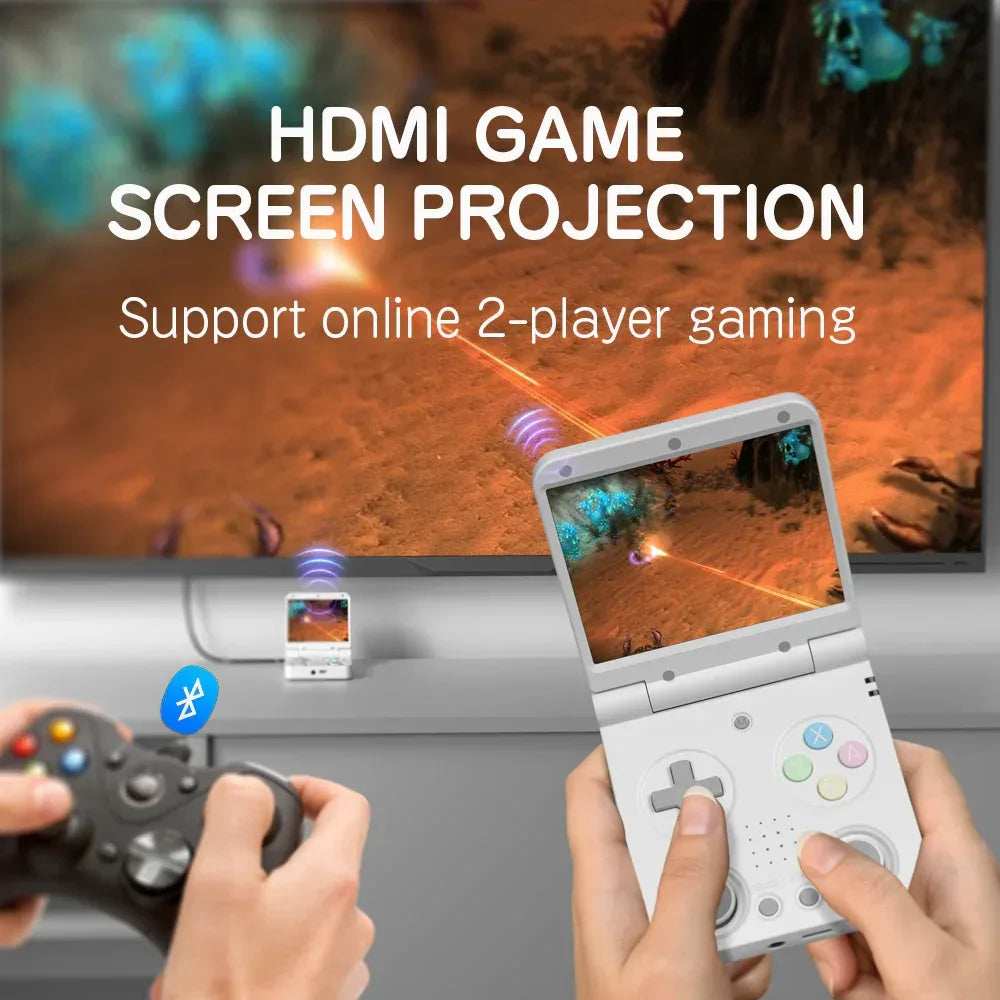
For gamers who prefer the clamshell aesthetic, the Miyoo Mini Flip is a dream come true. Mimicking the legendary Game Boy Advance SP, this tiny console protects its own screen when closed, making it the ultimate throw-in-your-bag device.

Ultra-Portability and Ergonomics
The Mini Flip is designed for quick, 5-to-10-minute gaming sessions on your daily commute.
-
The Hinge: Miyoo engineered a remarkably sturdy hinge that avoids the harsh, clicky feel of cheaper handhelds.
-
Buttons: It features softer, quieter membrane-style buttons that make silent gaming in public spaces or under the covers incredibly satisfying.
-
The Look: Available in eye-catching colors like Retro Gray and a striking Pikachu-esque Yellow, it looks as premium as it feels.
Miyoo Flip V2: The Upgraded Heavy Hitter
Bigger Screen, Better Controls
If the Mini Flip is optimized for short bursts, the Miyoo Flip V2 is built for the long haul. Addressing enthusiast feedback, the Flip V2 features an upgraded, heavy-duty hinge system and a larger footprint.

Enhanced Performance and Processing Power
The biggest differentiator for the Flip V2 is its upgraded internal hardware. While the Mini models comfortably top out at PS1 emulation, the Flip V2 pushes the boundaries further, successfully handling a massive selection of Nintendo DS titles and lighter 3D emulation. The larger screen factor drastically reduces eye strain, making it much more comfortable for complex RPGs or text-heavy retro games.
Feature Comparison: Which Miyoo is Right For You?
To help you decide at a glance, here is a direct breakdown of how these three stellar retro consoles stack up against each other:
| Feature | Miyoo Mini Plus | Miyoo Mini Flip | Miyoo Flip V2 |
| Form Factor | Vertical (Game Boy style) | Clamshell (GBA SP style) | Large Clamshell |
| Screen Size | 3.5-inch IPS | Compact IPS | Expanded IPS |
| Emulation Ceiling | PlayStation 1 (PS1) | PlayStation 1 (PS1) | Nintendo DS & Beyond |
| Best Used For | Long retro sessions at home | Everyday pocket carry (EDC) | Advanced retro emulation |
| Primary OS Choice | Onion OS Compatible | MinUI / Stock OS | Stock / SpruceOS |
The Real-World User Experience: What to Expect
The Out-of-Box Warning
Like many retro handhelds in this price bracket, the stock MicroSD cards shipped with the devices can occasionally be unreliable. To ensure the best experience, many community members recommend formatting your own high-quality SD card (such as a SanDisk or Samsung) and installing a custom OS like MinUI, SpruceOS, or Onion OS.
Charging Quirks
One minor critique shared across the Miyoo ecosystem is charging compatibility. These devices generally require standard USB-A to USB-C cables and slower 5V chargers. Attempting to use high-speed USB-C Power Delivery (PD) bricks (like a modern MacBook or phone charger) often won't register. Stick to the included cable, and you will have zero issues keeping your battery topped up.
Verdict: The Ultimate Nostalgia Buying Guide
Miyoo has successfully mastered the art of affordable nostalgia. No matter which device you pick, you are getting an incredible value-for-money gateway to thousands of childhood classics.
-
Buy the Miyoo Mini Plus if: You want the quintessential vertical Game Boy experience, maximum community software support (Onion OS), and a spacious 3.5-inch screen.
-
Buy the Miyoo Mini Flip if: Screen protection and maximum pocketability are your top priorities. It is the perfect "5-minutes-to-kill" companion.
-
Buy the Miyoo Flip V2 if: You want to play more demanding systems like the Nintendo DS, prefer a sturdier upgraded hinge, and want a larger form factor for ergonomic comfort.
Ready to reclaim your childhood? Check out the official Miyoo Collection to pick up your handheld today.
Popular Blog